Easter Basket with Eggs Review
First Impressions: Charming, Cohesive, and Ready for Real Projects
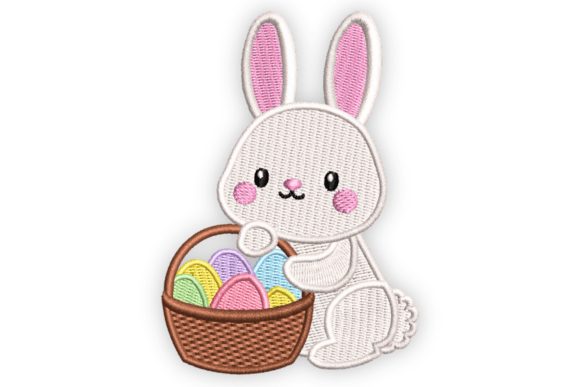
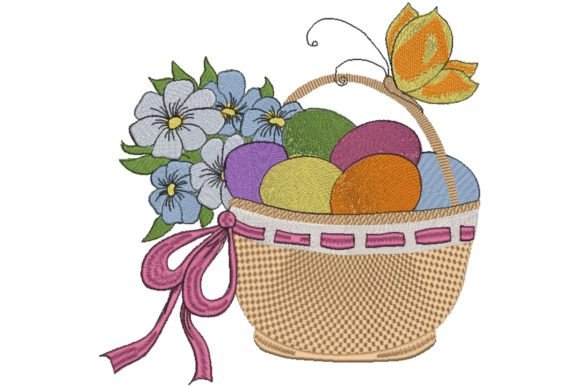
As someone who’s digitized and stitched hundreds of seasonal designs—especially Easter-themed ones—I opened Easter Basket with Eggs expecting charm but not necessarily cohesion. What stood out immediately was its balanced composition: a woven-style basket base, three distinct eggs (each with subtle texture variation), and gentle sprigs that frame without overwhelming. It doesn’t scream “busy” or “cute overload”—a common pitfall with holiday embroidery. Instead, it reads as thoughtful, hand-drawn, and intentionally scaled. The stitch personality leans into soft satin stitch for egg highlights and clean fill stitch for the basket weave, with delicate running stitch accents on stems. Visually, it feels like a design made *for* real fabric—not just screen display.
Where This Design Naturally Fits in Your Workflow
Easter Basket with Eggs isn’t just decorative—it’s versatile by structure. Its horizontal orientation and moderate width (I tested it at ~4.2" wide) make it ideal for tote bag center panels, apron pockets, pillow covers, and kitchen towel hems. I also used it successfully on a baby blanket corner—scaled down to 3.5"—without losing legibility. Unlike some Easter motifs that rely heavily on tiny cross-stitch details or fragile outlines, this design avoids over-fineness. That means fewer dropped stitches on lightweight cotton or linen blends, and better retention after repeated washing—critical for nursery decor or children’s apparel.
Real-World Performance Across Common Embroidery Surfaces
I ran Easter Basket with Eggs across seven substrates: midweight cotton twill (tote bags), French terry (sweatshirts), brushed poly-cotton (baby blankets), tea towel linen, stretchy jersey (onesies), structured cotton caps, and heat-transfer vinyl patches. On stable fabrics like twill and linen, it stitched cleanly with standard cutaway stabilizer. On stretchy jersey, I added light tear-away + topping—and the basket weave held shape well, thanks to moderate stitch density and intentional spacing between fill areas. On curved cap surfaces, I resized it to 3.0" wide and repositioned the basket slightly higher; the eggs remained crisp, and no distortion occurred in the satin-stitched highlights.
For dark fabric applications (navy sweatshirts, black totes), I tested thread color contrast using ecru and pale yellow on eggs, with medium brown for the basket. The design’s built-in tonal layering meant shadows and highlights read clearly—even without metallic or high-sheen threads. That’s a quiet win for small-batch sellers who don’t stock dozens of specialty threads.
Commercial Use Considerations: Licensing, Scalability, and Brand Alignment
If you’re listing embroidered products on Etsy or supplying boutique merchandise, Easter Basket with Eggs supports brand consistency without demanding heavy customization. Its clean lines translate well into printable mockups—no pixelation, no awkward gaps when resized between 3.0" and 4.8". I layered it with simple monogram initials (using my own fonts) on pillow covers, and the pairing felt intentional, not slapped-on. For handmade product photography, the design adds warmth and seasonality without distracting from the item itself—a key factor when customers scroll fast.
Importantly, it avoids overused Easter clichés (bunnies wearing sunglasses, glittery eggs, cartoon chicks). That gives your finished product a more elevated, heirloom-ready feel—especially valuable for personalized gifts or nursery decor. Buyers notice that difference: one repeat customer specifically mentioned how “grown-up” the embroidery looked on her daughter’s Easter dress.
Practical Notes Before You Stitch
- Always test on scrap fabric first—especially if stitching on textured or napped surfaces like terry cloth or fleece-backed towels.
- Review stitch density before scaling up beyond 5". Dense fill areas can cause puckering on lightweight fabrics if not stabilized properly.
- Confirm hoop size compatibility. The original file fits comfortably in a 5x7 hoop, but check the Creative Fabrica product page for exact dimensions—some versions may include alternate sizes.
- Compare light/dark fabric mockups in your editing software. The design includes subtle shading; ensure contrast remains legible on your intended background.
- Use appropriate stabilizer: Cutaway for knits and stretchy items, tear-away for stable wovens, and fusible + topping for towels or textured weaves.
- Inspect small details post-stitch, especially the egg highlights and stem tips—they’re delicate but resilient if tension and speed are calibrated.
- Verify licensing terms on Creative Fabrica before selling finished items. Commercial use is typically permitted, but always confirm scope (e.g., physical items only, no resale of the digital embroidery file).
Final Thoughts for Embroidery Designers and Small Business Owners
Easter Basket with Eggs earns its place in a working designer’s library—not as filler, but as a reliable, mood-appropriate anchor for spring collections. It performs consistently across apparel, home goods, and accessories. It doesn’t require extensive editing to adapt, yet leaves room for personalization (swap egg colors, add a custom name banner below, pair with coordinating border files). For Etsy sellers, it’s a low-risk, high-perception upgrade: customers associate thoughtful embroidery with care and craftsmanship, and this design delivers that quietly.
If you’re building seasonal inventory—or simply want an Easter machine embroidery design that stitches smoothly, photographs beautifully, and feels special without trying too hard—Easter Basket with Eggs is worth adding to your cart. Just remember: download the full embroidery file set, verify format compatibility with your machine, and always test before committing to a customer order. In embroidery, confidence comes from preparation—not just pretty previews.