Credit Card Wallet: A Thoughtful Embroidered Accessory
As an embroidery designer who’s developed over 200 machine embroidery designs for personalized gift shops and Etsy sellers, I approached the Credit Card Wallet with both curiosity and caution. This isn’t just another accessory—it’s a compact canvas for meaning. When a bride asks for a “something small but sentimental” for her wedding party, or a new parent wants a coordinated set of baby embroidery + practical keepsakes, the Credit Card Wallet quietly rises to the occasion.
First Impressions: Minimalist Charm, Maximum Warmth
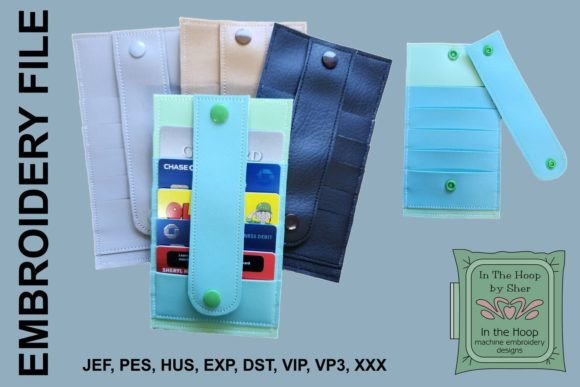
The Credit Card Wallet lands with gentle elegance—not flashy, not fussy, but unmistakably handmade. Its clean lines and balanced proportions evoke classic craftsmanship, while the five-card layout feels intentional and functional. There’s no excessive fill stitching or ornate borders; instead, it leans into thoughtful negative space and subtle topstitching cues that invite customization. It reads as modern heirloom: timeless enough for a 30th anniversary gift, fresh enough for a college grad’s first professional wallet.
Emotionally, it’s grounded and sincere—ideal for customers who value quiet significance over loud novelty. Think: a monogrammed wallet tucked into a baby’s welcome basket alongside a stitched onesie, or a soft linen version embroidered with wedding dates and gifted to groomsmen. It doesn’t shout “look at me”—it whispers, “I’m made for you.”
Where This Design Truly Shines
The Credit Card Wallet excels when paired with other personalized items in cohesive gifting suites:
- Baby embroidery bundles: Pair with a matching embroidered bib or blanket—use coordinating thread colors to unify the collection. The wallet becomes a keepsake for baby’s first ID card or vaccination record.
- Wedding gifts: Embroider with initials + date on the front flap. Offer it as a “groom’s gift” alternative to cufflinks—or include it in bridesmaid boxes with custom pillow covers and embroidered towels.
- Nursery decor & family keepsakes: Stitch a tiny birth flower or constellation motif onto the front panel. It transforms from utility to memory object—perfect for framing alongside ultrasound prints or hospital bracelets.
- Etsy listings & craft fair displays: Photograph it open beside a handwritten note or pressed flower. Its compact size makes it highly shippable and visually strong in flat-lay product photography—boosting buyer engagement instantly.
- Custom order previews: Use the Credit Card Wallet as a low-risk sample piece for clients testing your embroidery quality before committing to larger projects like tote bags or blanket embroidery.
Where to Proceed With Care
Like all elegant embroidery, the Credit Card Wallet rewards intentionality—and reveals its limits when rushed. Here’s where attention matters most:
- Small lettering or fine details: If adding names or dates inside the flap or along the edge, avoid fonts under 6 pt. Test legibility on scrap fabric—especially with dense thread or dark backgrounds.
- Fabric texture & weight: Works beautifully on medium-weight cotton, linen, and twill—but tread carefully on thick terry cloth (embroidered towel) or plush baby blankets. Excessive loft can distort stitch definition and reduce durability.
- Stretchy or curved surfaces: Not ideal for direct application to baby bodysuits or curved apron pockets. Reserve it for flat, stable substrates like wallet leather, woven cotton, or laminated fabric.
- Dark fabric & contrast: On black or navy, use matte metallic or high-contrast thread colors (ivory, pale gold, slate gray) rather than pastels. Always run a printable mockup first to assess visual impact.
- Frequent washing: While the wallet itself won’t be laundered like a pillow cover or kitchen towel, if you’re using it as part of a care kit (e.g., with embroidered washcloths), remind buyers to spot-clean only—stitch density and stabilizer choice affect long-term resilience.
Why It Elevates Your Handmade Product Line
The Credit Card Wallet subtly lifts perceived value—not through complexity, but through context. A customer paying $48 for a custom-embroidered tote bag expects craftsmanship. But when they receive a matching Credit Card Wallet tucked inside, wrapped in tissue with a handwritten note? That’s where trust deepens. It signals consistency, care, and attention to the full gifting experience.
For Etsy sellers and small shop owners, this design supports storytelling in listings: “Every detail considered—from the hand-stitched edge to the monogrammed interior.” It encourages repeat orders (“Can you do one for my mom?”) and cross-selling (“Add a matching embroidered keychain”). And because it’s compact, it photographs beautifully against natural light, textured backdrops, or lifestyle scenes—making your digital embroidery file feel tangible, even before purchase.
Practical Embroidery Notes You’ll Want to Follow
Before stitching your first Credit Card Wallet, treat it like any commercial embroidery project:
- Test on scrap fabric—same type and weight as your final product—to confirm tension, stitch density, and stabilizer hold.
- Compare thread color contrast on both light and dark fabric swatches. Subtle shifts matter more here than on a bold pillow cover.
- Verify hoop size compatibility. Since it’s labeled N THE HOOP MACHINE EMBROIDERY DESIGN, ensure your machine’s maximum hoop dimensions accommodate the full layout without re-hooping.
- Use cutaway or tear-away stabilizer based on fabric stability—not just preference. Woven cotton holds better with lightweight cutaway; linen may need medium-weight for crisp edges.
- Inspect small details post-stitch: flap alignment, slot clarity, and edge finish. A misaligned topstitch line breaks the illusion of precision.
- Confirm commercial licensing terms before selling finished products. As a digital embroidery file, its usage rights directly impact your small shop product viability.
The Credit Card Wallet isn’t just another embroidery file—it’s a bridge between utility and sentiment. For baby product creators, wedding gift designers, and Etsy sellers alike, it offers quiet versatility, emotional resonance, and real-world practicality. When stitched with care and offered with intention, it doesn’t just hold cards—it holds meaning.