Mom House Will Always Be Home
First Impression: Warm, Timeless, and Instantly Relatable
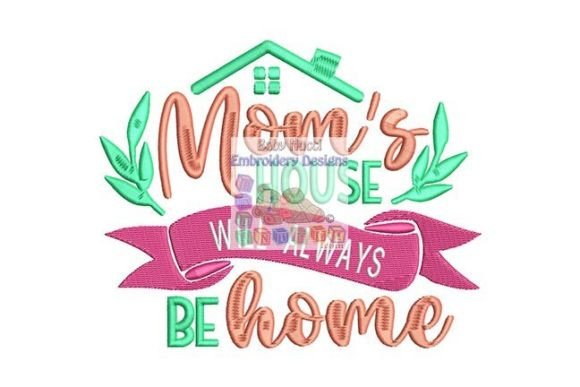
As an embroidery designer who’s prepped over 200 craft fair booths—from snowy Vermont markets to sun-drenched California pop-ups—I know what stops a shopper mid-aisle. Mom House Will Always Be Home lands with quiet confidence: it’s not loud or trendy, but deeply resonant. It reads as warm farmhouse meets heartfelt modern—soft enough for a linen tea towel, sturdy enough for a canvas tote. There’s no irony, no forced quirkiness. Just sincerity, clarity, and emotional weight. That’s gold at a handmade market.
Where It Shines: Craft Fair Product Pairings
This machine embroidery design thrives where authenticity and sentiment intersect. On a heavyweight cotton apron? Perfect—it grounds the piece in domestic pride without shouting. On a natural unbleached tea towel? Exceptional. The phrase breathes with the fabric’s texture, and the rhythm of “Mom House” feels intentional, almost architectural. As a tote bag design, it works best centered on the front panel—not too high, not too low—with generous negative space around it. Avoid cramming it near seams or gussets.
For embroidered patches, Mom House Will Always Be Home holds up well *if* digitized with clean satin-stitched lettering and balanced kerning—but beware tight curves or overlapping letters. On curved surfaces like caps, test placement early: the phrase flows best across the front panel (not the crown), and benefits from slight letter spacing adjustment to prevent visual crowding. As a pillow cover motif? Ideal at 4–5 inches wide—large enough to read from three feet, small enough to preserve stitch integrity on delicate fabrics.
What Customers Notice First (and Why It Sells)
At a crowded craft fair, attention lasts 1.7 seconds. Mom House Will Always Be Home wins because it’s instantly legible, emotionally specific, and context-aware. Shoppers don’t pause to decode irony—they recognize “Mom House” as shorthand for safety, memory, and unconditional welcome. That resonance translates directly to purchase intent, especially among adult children shopping for Mother’s Day gifts. It also photographs beautifully for Etsy listings: soft lighting + neutral background + one real mockup (e.g., folded tea towel with a sprig of dried lavender) creates scroll-stopping warmth.
Design Practicality for Batch Production
This is a repeatable, scalable embroidery file—not a one-off art piece. Its linear layout, consistent stroke weight, and moderate word count make it ideal for small shop product lines. You can easily adapt it across formats: shrink it slightly for a fabric pouch tag, enlarge it for a market bag, or simplify it into a minimalist outline for a printable mockup series. No complex fill motifs mean faster hooping, fewer thread breaks, and smoother transitions between fabric types.
Careful-Use Notes Every Embroidery Designer Should Know
- Dense stitch areas: Watch the “o” in “Home” and inner curves of “Mom”—tight satin stitches may pucker on thick terry cloth towels unless stabilized properly.
- Small lettering: At under 3 inches wide, the lowercase “m” and “n” risk blending on textured fabrics. Always test on your target towel weave before committing to 50 units.
- Dark fabric: This design relies on warmth and readability. On navy or charcoal, use ecru, oatmeal, or pale sage thread—not stark white—to preserve its gentle tone.
- Curved cap surfaces: Letter height must be reduced by 10–15% versus flat fabric; otherwise, outer characters stretch and distort.
- Fabric texture: Avoid highly napped fleece or bouclé for this phrase—it blurs letter definition. Stick to medium-weight cotton, linen-cotton blends, or stable knits.
Booth Impact & Brand Consistency
When grouped with complementary designs—think “Bake With Love,” “Garden Mama,” or simple botanical borders—Mom House Will Always Be Home anchors your display in emotional coherence. It tells customers your brand understands *why* people buy handmade: not just for utility, but for meaning stitched into everyday objects. Place it on your hero item (e.g., a folded apron draped over a wooden crate), and let it quietly invite conversation. Buyers will point, smile, and say, “That’s my mom.” That’s booth magic.
Must-Do Designer Checks Before Booth Day
- Test the embroidery file on scrap fabric matching your final product—same thread, same stabilizer, same hoop size.
- Verify thread contrast on *both* light and dark versions of your base fabric.
- Review letter spacing and baseline alignment—uneven gaps kill readability at arm’s length.
- Confirm hoop size compatibility with your embroidery machine and intended product (e.g., a 5x7 hoop won’t fit most cap fronts).
- Inspect stitch density visually—not just in software. Overly dense fills trap moisture and stiffen hand-stitched-feeling items.
- Use cutaway or tear-away stabilizer appropriate for fabric weight—never skip this step on kitchen towels or aprons.
- Create at least one finished product mockup *before* bulk stitching. See how it drapes, folds, and catches light.
- Compare thread colors across multiple fabric swatches—dye lots vary, and screen colors lie.
- Confirm commercial licensing terms for this digital embroidery file before selling finished products. If unclear, contact the designer or platform directly.
Final Thought: A Quiet Anchor for Your Mother S Day Line
Mom House Will Always Be Home isn’t flashy—but that’s its strength. In a sea of glittery fonts and cartoon moms, it offers grounded warmth. It performs reliably across tote bags, aprons, tea towels, and embroidered patches. It photographs well, scales cleanly, and connects deeply. For Etsy sellers, boutique makers, and craft fair entrepreneurs, it’s not just another Mother S Day embroidery—it’s a trusted, repeatable asset in your design assets library. Stitch it thoughtfully, present it honestly, and watch it become a quiet bestseller in your handmade product lineup.