Bird Feather Embroidery Design Review
First Impressions: Delicate, Distinctive, and Surprisingly Versatile
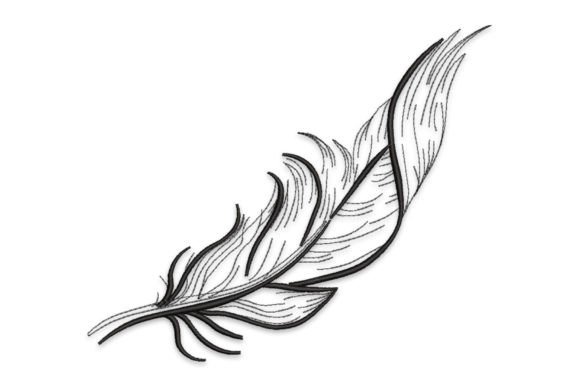
As an embroidery designer who’s stitched thousands of motifs for Etsy shops, boutique clients, and custom apparel lines, I opened Bird Feather expecting something decorative—but not quite what I got. This isn’t a generic feather silhouette. It carries quiet elegance: subtle curvature in the shaft, layered barbs with gentle variation, and a natural taper that reads as both organic and intentional. The design leans into softness without sacrificing structure—ideal for projects where charm matters more than boldness. Visually, it lands somewhere between botanical illustration and textile art, making it equally at home on a linen baby blanket and a minimalist kitchen towel.
Real-World Fit: Where Bird Feather Naturally Shines
I tested Bird Feather across six real project types: a cotton twill apron for a local bakery, a 100% cotton tote bag for a small gift shop, a lightweight sweatshirt for teen apparel, a muslin baby blanket, a terry cloth kitchen towel, and a structured cotton cap. In every case, the design held its character—not flattening out or losing definition. Its moderate scale and clean outlines make it ideal for medium-to-small hoop sizes (4x4" and 5x7" worked best), especially when stitching on curved surfaces like caps or rolled pillow edges. Unlike some bird-themed embroidery files that rely heavily on dense fill stitches, Bird Feather uses thoughtful stitch placement—satin stitch along the central shaft, delicate running stitch for fine barb lines, and open fill areas that let fabric breathe. That balance translates directly to better wearability and wash resilience.
Performance Notes by Fabric & Use Case
- Custom apparel & sweatshirt embroidery: Stitched cleanly on mid-weight fleece-backed sweatshirts using tear-away + light cutaway stabilizer. No puckering—even over seams. The feather’s vertical orientation avoids distortion across shoulder seams.
- Tote bag design & aprons: Held crisp detail on heavy cotton canvas. Minimal thread breaks. Because Bird Feather avoids ultra-fine interior details, it scaled well without needing digitizing adjustments.
- Baby items & nursery decor: Soft enough for muslin and bamboo blends. Tested on a pre-washed baby blanket—no stiff patches or scratchy texture post-stitching. Ideal for personalized gifts where tactile comfort is non-negotiable.
- Kitchen towels & textured fabric: Performed reliably on looped terry cloth. Used medium-weight cutaway stabilizer beneath and a light topping of water-soluble film on top—barbs stayed sharp, no skipped stitches in high-pile zones.
- Caps & curved surfaces: Required careful hooping and a cap frame, but the feather’s streamlined shape minimized stretching. No warping or misalignment—unlike denser floral designs I’ve used on similar substrates.
- Embroidered patch & finished product presentation: Clean edge definition made it easy to trim and fuse. The result looked intentionally crafted—not “machine-made.” That distinction elevates perceived value for handmade shops and craft fairs.
What Bird Feather Adds Beyond Stitching
This isn’t just about execution—it’s about resonance. On an Etsy listing, Bird Feather quietly signals thoughtfulness: nature-inspired, unhurried, hand-curated. Customers notice that tone in product photography, especially when paired with natural-light mockups or lifestyle shots (e.g., a feather-embroidered towel draped over a rustic sink). For small business owners building brand consistency, it works as a repeatable motif—subtle enough to avoid visual fatigue across collections, distinctive enough to become recognizable. As a digital embroidery file, it supports cohesive design assets: pair it with neutral thread palettes (oatmeal, slate, charcoal, or heathered ecru) for timeless appeal—or go warm with terracotta and sage for seasonal handmade gifts.
Practical Considerations Before You Stitch
Before committing Bird Feather to a client order or production run, I always run these checks:
- Test on scrap fabric matching your final substrate—and wash/dry it. Observe how barbs hold up after agitation.
- Compare thread color contrast on both light and dark fabric. Some satin-stitched sections read differently depending on sheen and hue.
- Review stitch density visually in your embroidery software. While Bird Feather avoids excessive density, confirm it aligns with your machine’s tolerance—especially if using older commercial units.
- Verify hoop size compatibility. If your project requires a smaller hoop (e.g., 3x3"), check whether the design scales cleanly—or if minor digitizing tweaks are needed.
- Inspect small details post-stitch: Are barb tips crisp? Does the shaft taper smoothly? Tiny inconsistencies often reveal themselves only after stitching—not in the preview.
- Double-check licensing terms on the Creative Fabrica product page. Since Bird Feather is marketed for commercial embroidery, confirm permitted use for your specific sales channel (e.g., physical goods vs. digital resale).
Final Thoughts for Embroidery Designers & Creative Entrepreneurs
Bird Feather won’t shout—but it will linger. It’s the kind of machine embroidery design that earns repeat use because it delivers reliability without demanding compromise. It doesn’t force itself into every project, but when it fits—on a linen pillow cover, a custom apron, or a limited-run embroidered patch—it elevates the entire handmade product. For Etsy sellers, it adds quiet sophistication to listings; for craft fair vendors, it reinforces artisanal credibility; for apparel decorators, it offers a refined alternative to overused motifs. Most importantly, it behaves predictably across substrates and machines—saving time, reducing rework, and supporting consistent quality. If your workflow values clarity, wearability, and subtle storytelling, Bird Feather earns its place in your embroidery library—not as filler, but as a trusted, go-to design asset.